Pest Control: Results-Oriented Methods to Protect Your Household and Organization
Pest Control: Efficient Strategies to Secure Your House and Enterprise
Opening to Pest Control
Pest Control encompasses the management or coordination of organisms considered as pests – creatures that harmfully change people's actions or surroundings. In New Jersey, in which assorted environments join residential and city development, potent Pest Control is not solely a indulgence but a must-have for keeping clean dwelling and business spaces. From the sprawling residential areas of Monmouth County to the integrated residential areas of Matawan, pest problems can plague each person, irrespective of how pristine or properly cared for their home may be.
The significance of utilizing powerful Pest Control strategies cannot be exaggerated. For residents, pests can destroy foundational integrity, adulterate food reserves, and pose important health dangers. Companies meet these identical difficulties, with the supplementary concern of image harm and potential deficit of clients if problems are detected. Common pests in New Jersey include rodents like rats and mice, different invertebrates such as ants, cockroaches, and bed bugs, and the remarkably damaging termites that can noiselessly undermine a building's base.
The Rationale Pest Control Is Important
Health Perils of Pest Control Chemicals
Several pests bear and transmit conditions that can affect persons and pets. Vermin are identified carriers of hantavirus, salmonella, and leptospirosis. Cockroaches can induce asthma bouts and sensitized responses, particularly in kids. Ticks, abundant in New Jersey's tree-covered regions, are infamous for disseminating Lyme disease, while mosquitoes can convey West Nile virus and Eastern Equine Encephalitis. Specialized Pest Control enables mitigate these health risks by destroying the basis of these possible disease spreaders.
Building Impairment in Pest Control
The skeletal injury induced pest control service NJ by pests can be extensive and pricey. Termites by themselves produce over $5 billion in home injury per year all over the United States, with New Jersey homes being remarkably prone due to the state's climate. Rodents can nibble through electrical cords, generating fire perils, while their ongoing chewing can injure insulation, pipes, and wood structural pieces. Even apparently non-threatening ants can compromise wooden structures if neglected unaddressed, especially carpenter ants which are frequent in Monmouth County.
Financial Results of Pest Control Services
Ignoring pest invasions can produce noteworthy monetary results. What potentially initiate as a slight problem calling for elementary processing can swiftly intensify into a serious predicament demanding wide-ranging restoration. For businesses, particularly those in the food industry or leisure fields, pest incursions can produce inadequate health examinations, interim closures, and enduring detriment to reputation and patron confidence. Funding in standard Pest Control is not merely about direct contentment—it's a prolonged budgetary protection.
Pest Control: Common Family and Commercial Pests
Rodents (Rats and Mice)
When it involves locating rodent infestations in your New Jersey home, vigilance is critical. You perhaps observe excrement near food supplies, in storage units, or underneath sinks. Gnaw marks on food covering, wood, and electrical cables are indicative symptoms of their presence. At night, you may notice scrabbling noises in barriers, top boundaries, or beneath floors as these nocturnal animals become animated. If you locate nests built from ripped stationery, fabric, or desiccated plant substance, that's a obvious symptom rodents have set up themselves home. Oily rub marks beside baseboards and barriers appear as rodents adopt the same paths frequently, while your pets may exhibit strange demeanor such as woofing or pawing at spots under instruments or furnishings where rodents seek refuge.
Small mammals in New Jersey homes and establishments form various menaces above pure bother. They can taint food and production surfaces with infectious agents residing in their urination and stools. Their perpetual need to munch can impair belongings, particularly wiring, which forms fire hazards. In Matawan and surrounding zones, the Norway rat and house mouse are particularly problematic, thriving in both municipal and residential areas. Successful Pest Control measures are essential to manage these damaging encroachers.
Invertebrates (Ants, Cockroaches, Bed Bugs)
Insect invasions show themselves in numerous modes according to the category. Ant problems develop into obvious when you observe apparent ant lines pointing to food stocks, or when you discover diminutive collections of soil or wood splinters made by carpenter ants. Cockroach problems often exhibit themselves through dark droppings resembling coffee grounds or black pepper, a characteristic stale aroma that infiltrates contaminated places, and the occurrence of egg capsules in hidden corners. Bed bug issues materialize as rust-colored speckles on mattresses and fixtures, shed skins near relaxing places, microscopic blood smudges on sheets, and scratchy red lumps on skin generally organized in a succession or assembly.
Arthropods constitute the most assorted category of pests in New Jersey. Cockroaches can set off asthma and allergies while dispersing several infectious agents. Bed bugs, while not disease spreaders, bring about marked soreness, sleep intrusion, and mental distress. Particular ant kinds, like carpenter ants common in Monmouth County's sylvan zones, can make constructional deterioration akin to termites over time. Qualified Pest Control agencies can detect precise insect breeds and implement targeted management tactics that confront the special behaviors and exposures of each pest.
Termites
Finding termite existence soon necessitates understanding the subtle signs of their manifestation. You may observe cast-off wings near portals and doors after swarmers have spotted a mate and set up a new population. Mud tubes on outdoor surfaces, wood beams, or in crawl spaces operate as safeguarded highways for these damaging critters. Wood that resonates unfilled when patted shows termites have been feasting from internally. Doors and casements that suddenly adhere may suggest twisting from termite injury, while cracked or bubbling paint resembling water injury often hides termite activity underneath. Detecting frass—termite droppings comparable to small wood-colored fragments—gives another evidence of their unwanted occurrence.
Termites constitute perhaps the most considerable constructional risk between all usual pests. In New Jersey, the Eastern subterranean termite is pervasive and specifically detrimental. These bugs can stay hidden for periods while causing extensive injury to timber framework components. Homes in Matawan and all over Monmouth County, especially older dwellings, are prone to termite infestations. The typical charge of term pest control.
Pest Control Security Considerations
Proper Application of Chemicals and Substances in Pest Control
While products grow necessary in your pest control approach, prioritizing protection demands attention to various critical methods that shield persons, animals, and the surroundings. Continuously read and observe label instructions exactly, as these binding directions demonstrate thorough examination and regulatory review designed to reduce risks. Utilize the smallest successful amount of product to reach control while decreasing unnecessary product addition into your home environment. Use chemicals only in locations designated on the label, avoiding unauthorized treatments that may produce unexpected hazards or reduce performance. Wear suitable protective equipment as indicated by product producers to stop individual contact during application. House products in their initial bottles with labels intact to maintain entry to safety data and prevent confusion. Maintain detailed documentation of all treatments, documenting products applied, dilution rates, areas applied to, and times of treatment for future reference. Permit sufficient curing and air circulation before reentering applied areas, especially crucial in New Jersey's conditions where dampness can alter setting periods. Consider lower-toxicity substitutes when successful, as improvements in pest elimination have created many safer solutions that preserve efficacy while decreasing potential risks.
Protecting Pets and Young ones While performing Pest Control Treatments
Extra steps turn essential when performing pest control treatments in homes with susceptible family occupants. Take away pets during application and until areas are set to stop close interaction with damp products or gases that could cause harmful reactions. Protect or remove pet nutrition, drinking containers, and playthings before treatment to stop pollution that could cause accidental consumption. Put children's playthings apart from application locations, specifically things that young kids might insert in their lips. Sanitize and sterilize food preparation areas after treatment, even if they were not immediately applied to, to eradicate any leftovers that might have settled during service. Hold children away from treated spaces for the suggested period, extending this period for crawling infants who have greater close exposure with floors and low spaces. Think about non-toxic to pets and non-toxic to children substance alternatives when accessible, as many modern chemicals target particular pest biology while minimizing human poison. Most importantly, inform professional specialists about the occurrence of companions, kids, or expecting home members before they formulate application approaches, enabling them to adjust methods and substance choices suitably.
Official Standards and Adherence with Pest Control
Pest control in New Jersey operates within a governmental structure intended to safeguard general safety and the surroundings while providing effective pest elimination. The New Jersey Department of Environmental Protection oversees pest elimination activities, mandating professional pest control companies to achieve defined specifications. Organizations must hire licensed specialists who have cleared official tests displaying proficiency in pest study, service methods, and safety standards. These firms must copyright adequate protection protection safeguarding both their technicians and their clients from potential injury or injuries connected with pest control operations. Tight rules control product keeping, shipping, and elimination to prevent environmental contamination and improper access. Technicians must provide Safety Data Sheets upon request, recording the attributes and risks of products utilized in applications. Notification guidelines relate for some uses, particularly in multi-unit structures or business areas with several tenants. Thorough application records must be kept, creating an review history of pest control operations. Furthermore, only products registered for use in New Jersey may be legally applied, ensuring that regional natural situations and environments have been evaluated in the licensing process. For commercial establishments in Matawan and throughout Monmouth County, supplementary regulations may relate relying on the sector, specifically for dining service, medical, and child care establishments where pest control overlaps with other general safety aspects.
Natural Pest Control Solutions
Unified Pest Management (IPM) System
Combined Pest Management represents the gold benchmark in today's pest control, emphasizing on long-term protection through a mix of approaches that limit ecological effect while enhancing success. The IPM procedure commences with thorough examination and tracking to pinpoint pest pressure exactly, setting up baseline information about types occurring and amount counts. This results in precise identification of pest kinds, guaranteeing management work aim at particular habits and susceptibilities rather than applying generic treatments. Practitioners create level quantities that necessitate intervention, realizing that the simple occurrence of a few creatures does not always call for treatment if populations continue under damaging numbers. When control grows required, IPM uses numerous management methods in combination, usually beginning with low-impact approaches and escalating only when essential. Throughout the system, practitioners review success and modify strategies as needed, establishing a dynamic system responsive to varying circumstances. Most vitally, IPM focuses on prevention over treatment, dealing with construction and ambient conditions that sustain pest groups rather than only eradicating present pests. Many pest control organizations in New Jersey provide IPM-based services that match with the region's drive toward reduced-risk pest control practices, notably in vulnerable environments like schools, healthcare establishments, and nutrition manufacturing plants.
Alternative Control Approaches
Efficient pest control often integrates natural strategies that can resolve or reduce pest concerns without adding substances into the environment. Physical blockades such as filters, entrance seals, and filling block pest penetration totally, dealing with the problem at its root. Physical controls like snares and exclusion systems extract present creatures while preventing fresh entries. Organic systems including useful organisms and microbes introduce organic antagonists that attack specific pests while maintaining useful life forms safe. Environmental practices adjust the setting to deter creatures, such as modifying moisture patterns to reduce dampness that lures particular pests. Environment adjustment minimizes harborage and sustenance supplies, making properties reduced favorable to troublesome guests. For specific creatures like bed bugs, thermal treatments supply exceptionally effective treatment without harmful leftovers by boosting thermal levels over the thermal death limit for all developmental cycles of the target pest. Likewise, cold methods for warehoused product insects like grain beetles or pantry insects can eradicate problems in consumable commodities without harmful contamination. These strategies demonstrate specifically useful in New Jersey's diverse locations, where closeness to liquid bodies, safeguarded ecological areas, and heavy urban areas generates numerous conditions where synthetic decrease grows preferable or essential.
Green Pest Control Management Options
The pest control industry keeps to progress toward greater eco-conscious approaches that keep success while reducing environmental footprint. Plant-based insecticides extracted from organic extracts like pyrethrum, neem oil, and natural extracts offer targeted treatment with reduced lasting power in the environment. Organic pesticides containing microbes, spores, or organisms that target certain pest insects deliver specificity that conventional universal products can't achieve. Reproductive modifiers that inhibit pest mating by blocking with maturation processes offer long-term quantity suppression without quick harmful impacts on developed creatures. Attractant devices that observe or disturb pest breeding help identify when intervention becomes essential and can avoid mating in specific types. The field more and more embraces reduced-risk pesticides with reduced surrounding impact, transitioning apart from older formulations with wider consequences on non-target species. Accurate delivery methods that decrease overall pesticide use deliver services directly where needed rather than distributing chemicals across large zones. Green certification programs for pest treatment businesses set guidelines for environmentally preferable assistance and supply consumers with obvious recognition of providers dedicated to eco-conscious practices. In naturally critical zones of New Jersey, containing portions of Monmouth County with proximity to marine bodies, these sustainable strategies are specifically valuable for safeguarding both individual wellbeing and wild environments while nonetheless providing efficient pest management.
Finding a Local Pest Control Service Provider in New Jersey
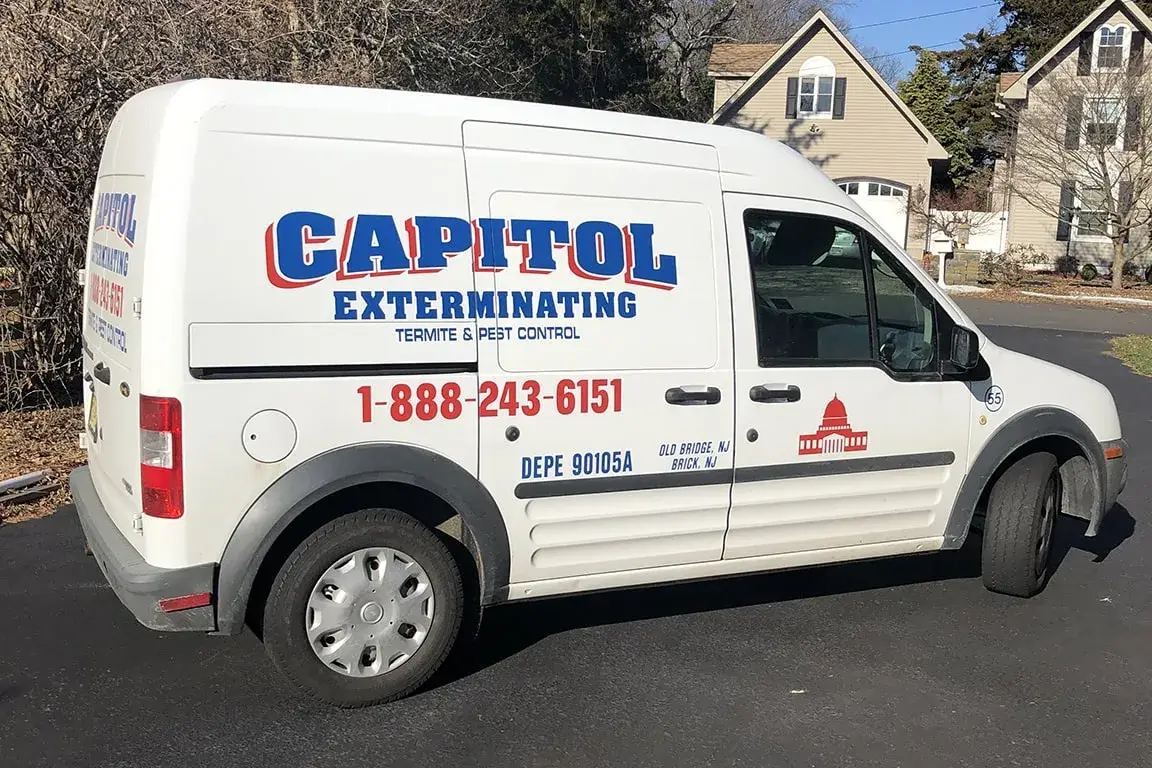
Capitol Exterminating System
272 NJ-34
Matawan, NJ 07747
(732) 441-1900
Often Requested Queries (FAQs) about Pest Control
How regularly should pest control be done?
For many New Jersey houses, every three months pest control provides adequate defense against seasonal pest threats. This frequency coordinates with the area's unique seasons, each creating distinct pest difficulties that call for precautionary attention. Springtime procedures generally deal with appearing ant colonies and surviving insects growing active. Warm season services center on mosquitoes, parasites, and numerous airborne pests that succeed in warmer weather. Autumn treatments arrange properties for rodents and surviving insects searching for protection as weather drop. Cold season services maintain safeguarding against internal organisms while dealing with mouse and rat pressure at its greatest. Nevertheless, this rate may increase for buildings with individual risk conditions or active problems that demand more thorough handling. Residences near forested regions in Monmouth County may gain from additional parasite and mosquito control applications during peak times. Properties with history of certain pest troubles commonly require directed additional treatments beyond the regular seasonal frequency. Industrial establishments, notably restaurant industry businesses in locations like Matawan, regularly demand regular attention to preserve agreement with sanitary regulations and avoid problems that could harm credibility and enterprise functions.
Is specialist pest control secure for companions?
When conducted correctly, qualified pest control can be harmless for animals through thoughtful chemical choosing and application approaches that decrease contact. Contemporary focused application procedures and minimal-impact chemicals have substantially improved wellness aspects compared to previous pest control techniques. Current services often apply compounds specifically created to have low toxicity to pets while continuing productive against designated organisms with alternative physiologies. Qualified professionals obtain instruction in employment approaches that locate substances in areas pets are unable to get to, such as wall voids, openings and crevices, or back of devices. However, companions should be relocated throughout procedure and until all services have solidified fully, obeying certain pause periods advised by the product manufacturer and professional. Fish systems should be enclosed and air systems turned off throughout procedure to prevent contamination from aerial particles. Pet possessions including beds, toys, and eating bowls should be taken away or covered during treatment. Address any issues with your pest control specialist, who can propose correct waiting periods based on the certain treatments used and change strategies for homes with notably susceptible pets like avians or cold-blooded animals that may have separate bodily susceptibilities than felines and dogs.
What are the signs of a significant pest issue?
Beyond observable insects themselves, several danger signs show possibly serious infestations needing immediate pest control intervention. Strange odors frequently emerge with big invasions – moldy, greasy smells may reveal rodents, while sugary, almond-like aromas sometimes follow German cockroach communities. Puzzling construction destruction like sagging boards, blistering surface, or breaking timber may show termite presence or carpenter ant infestations destroying structural elements. Strange sounds within barriers or attics, specifically at evening, commonly indicate rodent behavior as these evening organisms become mobile in hidden spaces. Plentiful debris appearing as small sawdust near wood elements may truly be waste or feces from timber-damaging creatures. Some families face puzzling health concerns like airway problems or irritation that improve when absent from home, possibly revealing creature problems impacting inside atmosphere purity. In New Jersey homes, specific attention should be directed to underground and lower areas where moisture issues can maintain pest communities, specifically in older homes throughout Monmouth County where support splits and deteriorating material offer many entry points. Discovering multiple dead bugs of the matching kind suggests a greater population in the area, while residue traces along baseboards suggest confirmed mouse and rat routes with regular movement.
Can I avoid creatures without pest control pesticides?
Absolutely, various insects can be prevented through correct cleanliness, barrier methods, and habitat alteration without resorting to synthetic interventions. The basis of alternative pest control initiates with thorough prevention efforts – sealing gaps, openings, and holes that permit creatures to enter buildings in the beginning location. Putting in entry seals, repairing damaged screens, and filling infrastructure openings gets rid of frequent invasion places. Eliminating feeding sources through appropriate meal storage in tight vessels, prompt elimination of drops and bits, and regular refuse collection considerably minimizes draws that attract pests indoors. Reducing water by fixing seeping fixtures, bettering ventilation in moist locations, and addressing runoff issues eliminates the liquid origins multiple pests need. Keeping a distance region surrounding properties by trimming greenery, clearing organic debris, and keeping firewood lifted and separate from homes decreases shelter locations and invasion places. Using tangible obstacles like metal screen or steel material to prevent more significant spaces provides long-term blocking for rodents and rodents. Frequent maintenance that contains vacuuming gaps and spaces eliminates creature eggs and food particles that support pest growth. For current invasions, though, some form of control agent may be necessary to fix developed concerns, though many safer solutions are obtainable containing diatomaceous earth, boric substance, and bug-eliminating cleaners that supply reduced threat versus traditional substances.
What should I look forward to throughout qualified pest control procedure?
A qualified pest control service commonly initiates with a thorough assessment to identify pest species, access places, and encouraging conditions relating to the trouble. The expert should spend time checking both interior and outside locations, paying special focus to kitchens, restrooms, lower levels, and boundary structural supports where pest behavior regularly focuses. Upon completing this evaluation, the professional should describe their observations in completeness and propose a treatment strategy adapted to your unique case, discussing both the designated creatures and the techniques suggested for treating them. You may be given arrangement guidelines before procedure, potentially involving repositioning furniture, removing particular locations, or protecting animals. Throughout the procedure, the technician will use appropriate chemicals to targeted locations based on the pest types determined, focusing on gaps, openings, and pest shelter areas rather than distributing services around whole surfaces. They may place tracking systems like bug traps or bait devices that assist follow progress and offer continuing safeguarding. After completing services, a specialist should detail any after-service safety measures such as air movement standards, access times, or areas to wash. Before going, they should schedule return treatments if required for especially stubborn insects like sleeping pests or German insects that typically need multiple services for complete removal. During this procedure, specialists should accept inquiries and supply obvious information about the products and techniques employed, showing their instruction and devotion to both effectiveness and protection.
Effective pest control is an vital component of keeping healthy, safe home and professional settings in New Jersey. From the damp summers that create flying insects and blood-sucking insects to the frigid periods when rodents pursue protection indoors, pest threats persist a ongoing concern for residents and companies in Monmouth County and Matawan. By understanding frequent pests, using proactive measures, and knowing when to look for professional support, building owners can safeguard their assets and the wellness of occupants.
Using a forward-thinking method to pest control is always more effective and cost-effective than responding to developed problems. Routine examinations, suitable maintenance, and dealing with little concerns before they escalate can stop the substantial fees and interruptions associated with major pest concerns. When specialist support becomes required, deciding on a reputable, qualified pest control provider who employs integrated pest control strategies ensures effective solutions with small surrounding impact.